
The external environment has worsened further. While the Finnish economy entered into a recession, Swedish economic growth also dipped. The Finnish gross domestic product (GDP) dropped 0.6 per cent in October-December, 2022. It was the second quarter of negative growth, which is a technical definition of recession.

Banks bore the brunt of the sell-off.

'The assumed linear correlation between forced lower yields, higher bank borrowing from the RBI, higher lending, and higher growth involves leaps of faith, each a step on the quicksand of false beliefs,' warns Debashis Basu.

Even if the central bank doesn't pull the trigger later, it is still expected to by the end of the year.

Markets ended lower for the third straight day on Tuesday weighed down by profit taking in rate sensitives with bank shares leading the decline after hopes of rate cut by the central bank faded.

RBI director S Gurumurthy the package of more than Rs 20 lakh crore announced by the central government can be described as an interim measure.

The next round of bad news could come from Europe, where banks in a number of economies such as Italy, Portugal and Greece are sitting on mountains of bad loans.

As global markets near all-time highs driven by liquidity, Marc Faber suggests most asset prices worldwide are inflated.

The impending default on the IMF loans leaves Greece sliding towards an exit from the euro.
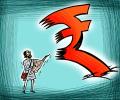
Barry Eichengreen, professor of economics and political science, University of California, Berkeley, analyzes the transparency of the Reserve Bank of India, the growth rate of the Indian economy and why he feels globalisation can never be rolled back.
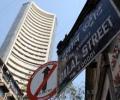
The Sensex ended below 28,000 for the second straight day at 27,869.

'If one believes that the Indian stock market will go up 70 per cent every year for the next 10 years, I wish you good luck!'

Under the Commission proposal, Greece would get the whole 7 billion in one go

The improving earnings and economic outlook has titled the scales back in favour of Indian equities this year, reports Pavan Burugula.

BofA Securities has revised its year-end Nifty target from its earlier projection of 16,000 to 14,500 now - down over 6 per cent from the current levels. Fast tightening monetary conditions, slowing growth/fears of US recession and the likely Nifty EPS (earnings per share) cuts, BofA Securities said, are the key headwinds for the markets in the near-term. However, clarity on macro and monetary policy outlook in the US/India, it said, is the silver lining that could see markets bottom out by August/September 2022.
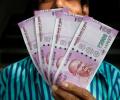
Heavy selling of the US dollar by banks and exporters in the face of renewed capital inflows predominantly kept sentiment highly buoyant

The dollar gained strength with the emergence of the US as the only developed economy showing signs of recovery.

A top-class board is important from a systemic point of view, more so at a time when the wider financial world and India Inc is chasing the same talent as banks.

Markets extended losses to end 1.5% down on Tuesday, amid weak global cues, after investors turned cautious ahead of key economic data and booked profits in rate sensitive shares while the further fall in the rupee continued to weigh on investor sent.

Dr Reddy's was the top gainer in the Sensex pack, rising over 3 per cent, followed by PowerGrid, TCS, HCL Tech, Infosys and Reliance Industries. On the other hand, L&T, IndusInd Bank, Bajaj Finserv and Bharti Airtel were among the laggards.

The rupee's strength has had an overall negative effect on merchandise trade
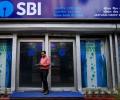
According to the complaint filed by SBI, the account had become non-performing asset on January 27, 2016.

Policymakers should aspire to restore the pre-Independence environment where the rupee was trusted and used all over South Asia, in Southeast Asia, in West Asia, and in East Africa, suggests Ajay Shah.

Markets could slide again owing to conditions in Europe and the US.

The world economy is going through a tough phase.

If Chinese growth starts falling, sharply or otherwise, the risk on trade might reverse.

The rupee which has been relatively stable over the last couple of months after having seen as much as 20 percent fall to a record low in late August has been boosted mainly by robust foreign fund inflows into the stock market.

As it is a highly liquid asset, central banks can afford to look past its short-term volatility to longer-run average returns.

The IMF dashed any hope that Athens could avert default.

The dollar-rupee rate could move in the opposite direction if dollar policy rates rise and the FPIs sell in December, says Devangshu Datta.

Global investors are fast losing appetite for equities, as deflation seems more of a reality. With commodity prices collapsing, few safe havens are left for investors, with many of the BRICS(Brazil, Russia, India, China and South Africa) losing their charm.

It is by now quite clear that in all likelihood the US Federal Reserve will hike interest rates in its next meeting in mid-December.

The rupee had lost 15 paise to hit two-week closing low of 60.68 against the dollar in yesterday's trade on consistent demand for the US currency from importers and some banks on strong global cues.

Chinese Premier Premier Li Keqiang said world economic recovery should not be driven by mainly China, but in concert with many countries.
Forex dealers said besides the dollar's gains against other currencies overseas, increased demand from importers for the American unit put pressure on the rupee but a higher opening in the domestic equity market capped losses.

Forex dealers said increased selling of the American currency by exporters and banks supported the rupee but a lower opening of the domestic equity market and dollar's rise against other currencies overseas restricted the gains.
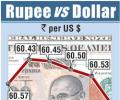
Forex dealers said besides dollar's gains against other currencies, increased demand for the American unit from importers put pressure on the rupee, but a higher opening in the domestic equity market limited the losses.

Earnings growth, attractive valuations and change in FPI flows from negative to positive over the next 12 months are some of the key triggers for an upside. "A poor monsoon, high inflation and further rate hike are some of the key risks

You also avoid capital gains tax during redemption in case the gold price is higher, making them tax efficient.

Rupee logs longest winning streak since 2012; up 19 paise.
